
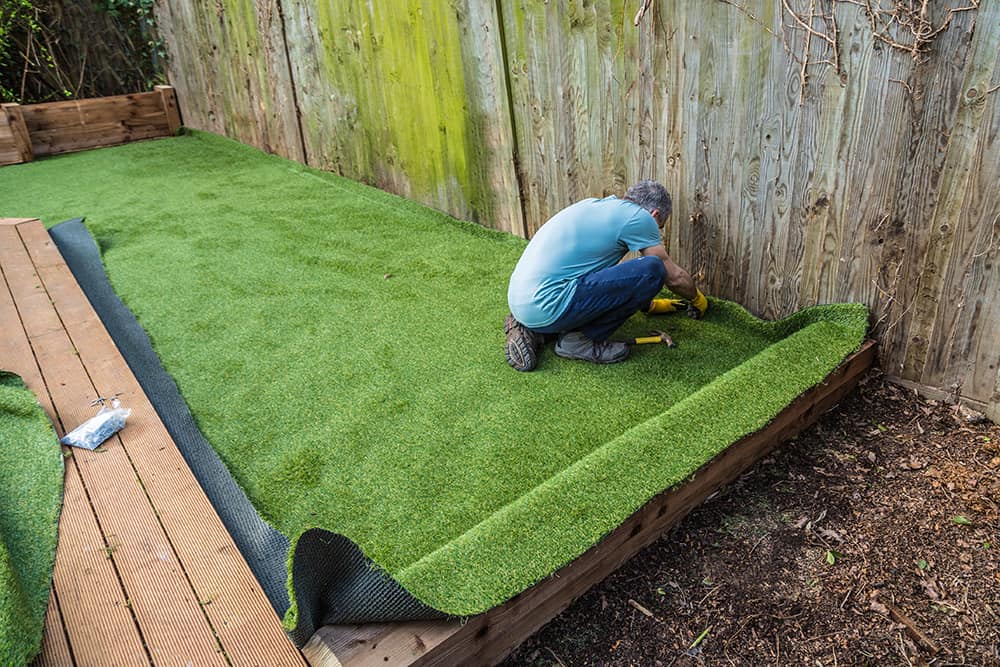
The most common question is can you install artificial grass on soil, concrete or pavers?
If you have been planning to install artificial grass on any of the mentioned surfaces, this article will help you.
Can You Install Artificial Grass on Soil?
Yes, you can install artificial grass on soil, and it is a common choice for Australian backyards. But rolling a turf over untreated ground can lead to uneven areas, weeds and poor drainage. A firm, level base is essential.
Remove existing grass, weeds, roots, stones and debris, and check for underground pipes and cables before digging. Excavate enough space for the base and turf, keeping the finished lawn level with nearby paths or edging. Add edging where needed to stop base material spreading.
A weed-control geotextile can help separate soil from the base, but it does not replace removing vegetation and roots. Spread a suitable crushed-rock base in layers and compact it thoroughly. Add a finer layer, such as crusher dust, then level and compact it. The required depth depends on site conditions and product instructions; many projects use around 80–100 mm for the base.
Drainage is just as important as levelling. Shape the base so water flows away from buildings and does not collect in low spots. Heavy soil or waterlogged areas may need additional drainage work.
Once the base is firm, roll out the grass with the pile facing one direction. Trim the edges, join sections with compatible joining tape and adhesive, and secure the perimeter with suitable turf pins or nails. Brush the grass upright and add infill if the product requires it. Soil takes more preparation than a hard surface, but works well for gardens, play areas and larger lawn spaces.
Can You Install Artificial Grass on Concrete?
Yes, you can install artificial grass over concrete but only if the slab is stable, clean and suitable for outdoor use. It is a practical way to refresh a patio, courtyard or balcony without removing the existing surface.
Inspect the concrete first. Repair major cracks, loose sections and uneven spots, as these can show through the grass or affect how securely it sits. Remove dust, grease, moss and loose material, and let the surface dry before applying adhesive. Use an appropriate repair or levelling product for deep dips or raised edges.
Check drainage carefully. Water can pass through many artificial-grass backings, but it still needs somewhere to go underneath. Make sure the concrete slopes towards a drain or safe outlet. Do not cover drains or allow water to collect against a building. On balconies or roofs, avoid damaging waterproofing membranes and seek professional advice if you are unsure about the existing system.
Measure the area and lay out the turf before fixing it. Keep each piece facing the same pile direction, let it settle flat and trim it to fit. If you wish for a permanent installation, use an outdoor adhesive or turf binder designed for artificial grass and concrete. Follow the manufacturer’s directions, including curing time. A removable fixing method may be better if you want to lift the grass later.
Can You Install Artificial Grass on Pavers or Paving Slabs?
Yes, artificial grass can be laid over pavers or paving slabs in courtyards, patios, paths and outdoor entertaining areas. The paving must be stable and reasonably even. Lose slabs, large gaps or different heights can affect the finished lawn.
Check for rocking, broken or uneven pavers and repair or replace unstable pieces. Remove dirt, leaves and moss, and smooth sharp edges that could damage the backing. Large gaps and deep joints may need to be filled with a suitable exterior repair material and allowed to cure; otherwise, they may show through the turf or create an uneven feel.
Check where rainwater goes. Water must drain away rather than collect under the grass, particularly near walls and doorways. Keep drains and access points clear. If the pavers sit over a balcony or waterproofed structure, make sure the installation will not damage the membrane or interfere with drainage.
Measure the area and lay the turf with all pieces facing the same direction. Trim around corners and edges, and join sections with compatible joining tape and adhesive. Depending on the site, artificial-grass adhesive can secure the perimeter or selected areas to the paving. Follow product instructions and confirm the surface is suitable for bonding.
Which Surface Is Best for Artificial Grass?
There is no single best surface for every project. Soil, concrete and pavers can all work when preparation is good. Your choice depends on the area’s condition, drainage, budget, intended use and whether you want a permanent or removable installation.
Soil is usually best for a traditional garden lawn or a larger area. It allows flexibility in shaping the space but requires more groundwork: vegetation must be removed and a compacted base built to help prevent dips and puddles.
Concrete suits existing patios, balconies and courtyards. It provides a firm foundation and usually needs less groundwork than soil. The slab must be sound, water needs a clear route to drain away, and the adhesive must be suitable for outdoor use.
Pavers are useful when you want to keep an existing paved area while making it greener and softer underfoot. They suit some courtyards and decorative spaces, but loose slabs, uneven heights and wide joints need attention first.
Before choosing, consider whether water drains away after rain, whether the surface is flat and stable, and whether people or pets will use the area often. Keep doorways, drains and access points usable, and check that the fixing method suits the surface and weather.
Conclusion
So, can you install artificial grass on soil, concrete or pavers? Yes, artificial grass can be installed on soil, concrete or pavers. Soil usually needs a compacted base, while concrete and paving need a clean, stable surface and a suitable fixing method.
Synthetic Grass Warehouse Australia offers artificial-grass products and installation guidance. If the area has poor drainage, unstable paving, major concrete damage or a complicated balcony waterproofing system, consult a qualified installer.